Blog

  • BREAKING NEWS: NASA confirms that in 2026, Earth will start to… See more

    BREAKING NEWS: NASA confirms that in 2026, Earth will start to… See more

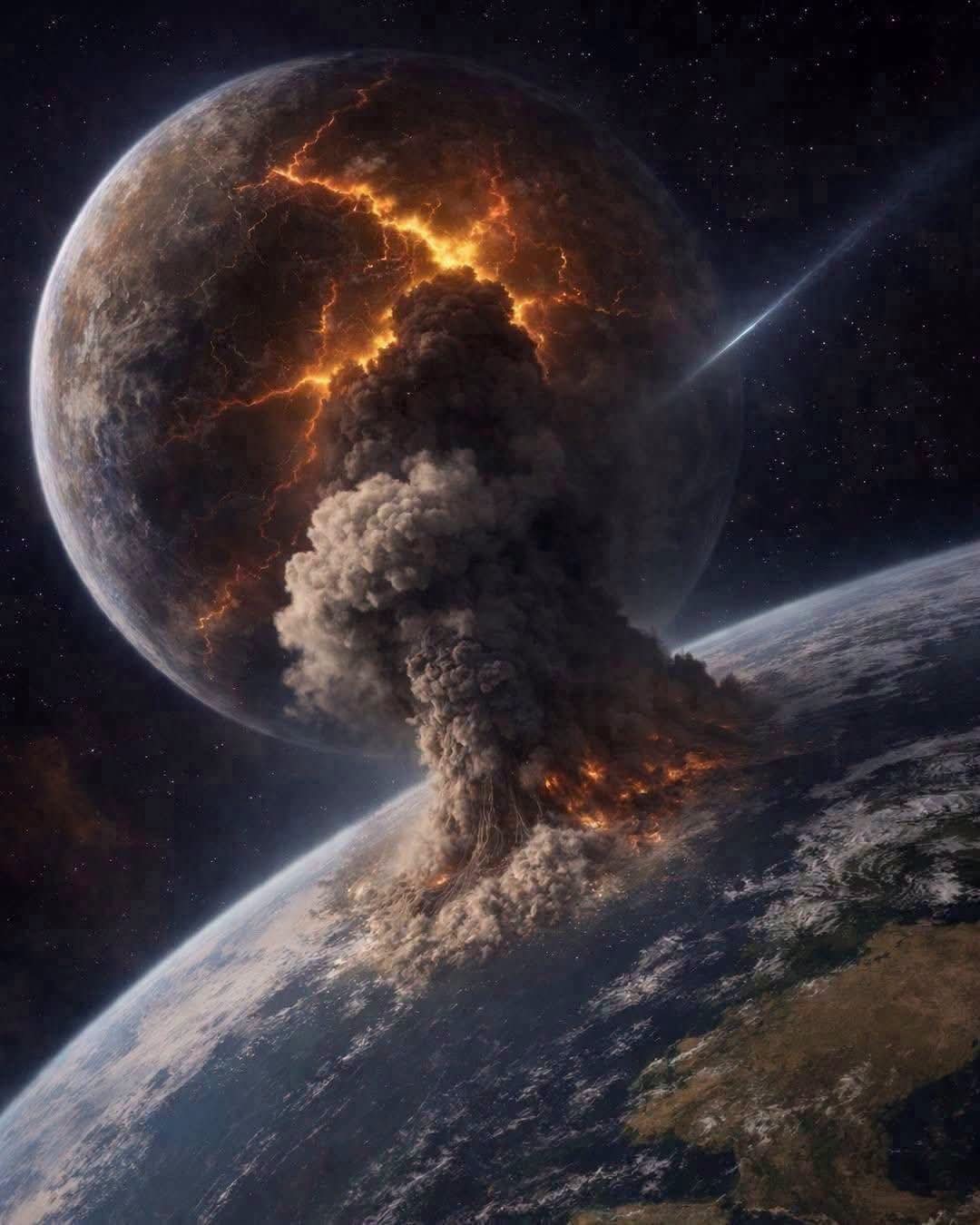
    BREAKING NEWS: Asteroid 52768 (1998 OR2) Will Not Strike Earth

    We are, for once, spared. Asteroid 52768 (1998 OR2) will not strike Earth; it will glide past at a safe distance, a vast mountain of rock that will never touch our world.

    Yet its passage forces us to confront a fragile truth: survival is not guaranteed by luck alone. It is earned through vigilance, foresight, and the uncomfortable willingness to imagine disaster before it happens.

    This asteroid becomes less an object in the sky than a mirror held up to us. It reveals how easily we are distracted by the noise of daily crises while a slower, quieter danger moves relentlessly on.

    The choice before us is stark. We can treat this encounter as a curious spectacle, soon forgotten, or as a final warning delivered without drama: prepare now, while we still have the luxury of time.

  • NASA Astronauts Uncover Evidence of Alien-Occupied City on the Moon

    NASA Astronauts Uncover Evidence of Alien-Occupied City on the Moon

    UFOs on Live TV: Did Millions in the UK Witness the Unexplained?

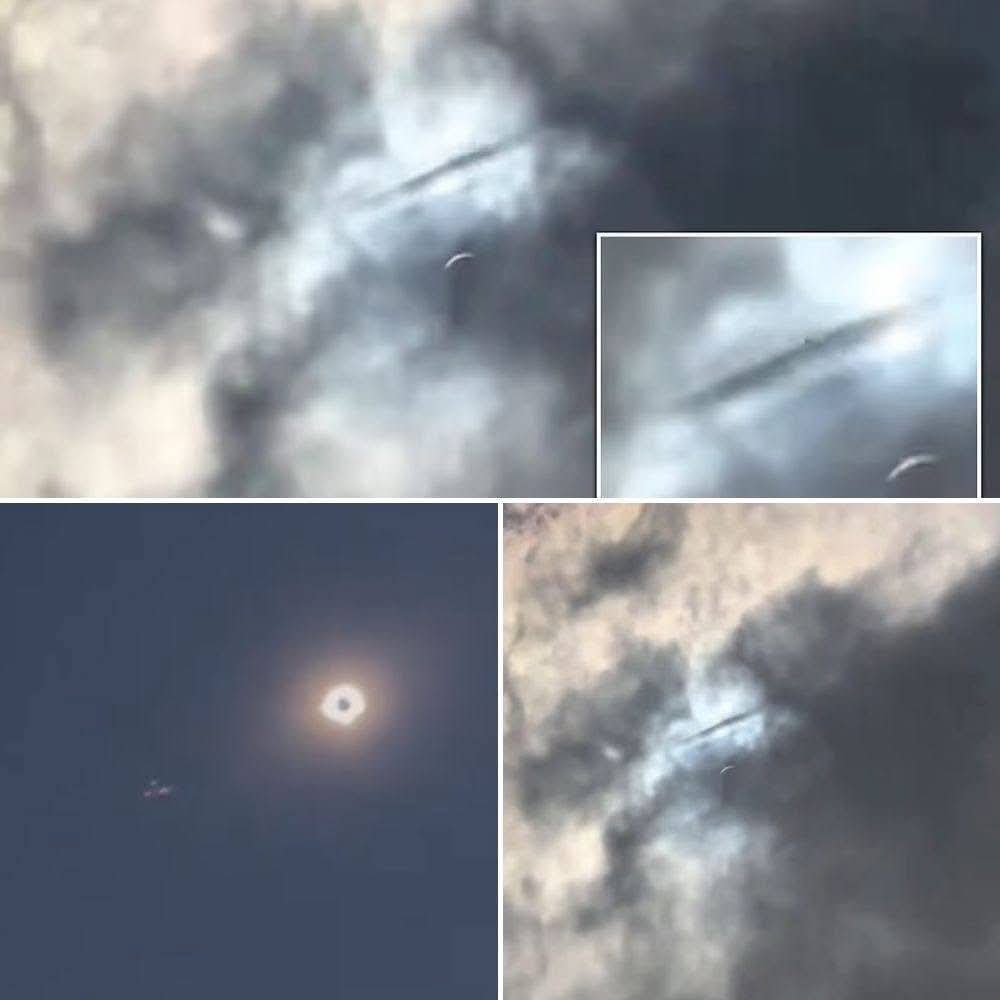
    On a quiet morning in 2009, BBC viewers in Newcastle were stunned when a live webcam feed appeared to capture a mysterious streak of light zooming past the Millennium Bridge.

    Was it a UFO? For years, the brief footage has fueled debate, with UFO expert Nick Pope describing it as an intriguing film and a genuine mystery. But did millions of people in the UK actually witness the unexplained event live?

    A Look at the Evidence

    The 2009 Newcastle Sighting

    During a BBC morning broadcast, a bright white streak suddenly darted across the sky near Newcastle’s Millennium Bridge. When the footage was slowed down, the object did not appear to be a conventional bird, but no definitive explanation was established.

    Although the incident was not witnessed live by millions of viewers, the clip later attracted significant attention online.

    The 2022 Platinum Jubilee Claim

    Another claim circulated on social media suggesting that a UFO appeared during Queen Elizabeth II’s Platinum Jubilee celebrations and was supposedly witnessed by millions.

    However, there was no substantial reporting from major news organizations confirming the incident. The object may have been a balloon or another ordinary aerial object rather than something extraterrestrial.

    Similar Incidents Around the World

    Live television has captured other mysterious objects in the sky, including incidents reported in Vancouver in 2014 and Brazil in 2009. In many cases, supposedly unexplained objects were eventually attributed to drones, balloons, satellites, aircraft, or optical effects.

    The UK also recorded thousands of UFO reports in recent years, although many had ordinary explanations.

    Why Does the Hype Continue?

    The idea of millions of people witnessing a UFO on live television is naturally fascinating. A few seconds of ambiguous footage can quickly spread across social media, where speculation often grows faster than verified information.

    Psychological factors can also influence how people interpret unusual objects. When viewers expect to see something extraordinary, an unclear light or moving object can appear far more mysterious.

    Conspiracy theories about governments hiding evidence of extraterrestrial life can further increase public interest, despite the lack of conclusive evidence supporting such claims.

    So, What Really Happened?

    The 2009 Newcastle incident remains one of the more intriguing examples of an unexplained object appearing during a UK television broadcast. However, there is no solid evidence that millions of people witnessed a UFO in real time.

    The Platinum Jubilee UFO claim is even less substantiated.

    Ultimately, these incidents demonstrate how quickly a brief and ambiguous image can become a major mystery. Until reliable evidence identifies an object as something genuinely unknown, UFO footage should be treated with curiosity—but also with caution.

  • UFOs on Live TV: Did Millions in the UK Witness the Unexplained

    UFOs on Live TV: Did Millions in the UK Witness the Unexplained

    UFOs on Live TV: Did Millions in the UK Witness the Unexplained?

    On a quiet morning in 2009, BBC viewers in Newcastle were stunned when a live webcam feed caught a mysterious streak of light zooming past the Millennium Bridge.

    Was it a UFO? For years, this fleeting moment has fueled debate, with UFO expert Nick Pope calling it “an intriguing film and a genuine mystery.” But was this, or any other event, the “eye-opening experience” for millions in the UK that some claim?

    A Look at the Evidence

    The 2009 Newcastle Sighting

    During a BBC morning broadcast, a white streak darted across the sky. Slowed-down footage appeared to rule out a bird, but no clear explanation emerged. While the event was not seen live by millions of people, the clip later spread rapidly online.

    The 2022 Platinum Jubilee Claim

    A post on X claimed that a UFO appeared during Queen Elizabeth II’s Platinum Jubilee and was supposedly seen by millions of viewers. However, no major news outlet reported the incident, and the claim remains unverified. Some speculation suggests the object may have been a balloon rather than something extraterrestrial.

    Global Context

    Similar “UFO” sightings captured during live television broadcasts have occurred around the world, including incidents reported in Vancouver in 2014 and Brazil in 2009. In many cases, objects initially described as UFOs were later attributed to drones, balloons, satellites, or optical effects.

    The UK recorded 1,789 UFO reports between 2020 and 2023, although many of these sightings have ordinary explanations.

    Why the Hype?

    The idea that millions of people could witness a UFO live on television is captivating, but such claims are often exaggerated.

    Brief and ambiguous footage can quickly gain attention online because of our fascination with unexplained phenomena. Psychological factors can also influence how people interpret unusual objects, particularly when they already expect to see something extraordinary.

    Conspiracy theories suggesting that governments are hiding evidence of extraterrestrial activity can further increase public interest, even though strong evidence supporting such claims remains scarce.

    So, What Really Happened?

    The 2009 Newcastle incident remains one of the more intriguing unexplained objects captured during a UK television broadcast. However, it did not captivate millions of viewers in real time as some later claims suggest.

    The Platinum Jubilee UFO claim appears even less substantiated, with no reliable evidence confirming that an extraterrestrial object appeared during the event.

    Ultimately, while some UFO footage remains genuinely unexplained, an unexplained object is not automatically proof of extraterrestrial life. Many apparent UFOs can eventually be explained as balloons, drones, satellites, aircraft, atmospheric effects, or camera artifacts.

  • James Webb Telescope Just Dete…See more

    James Webb Telescope Just Dete…See more


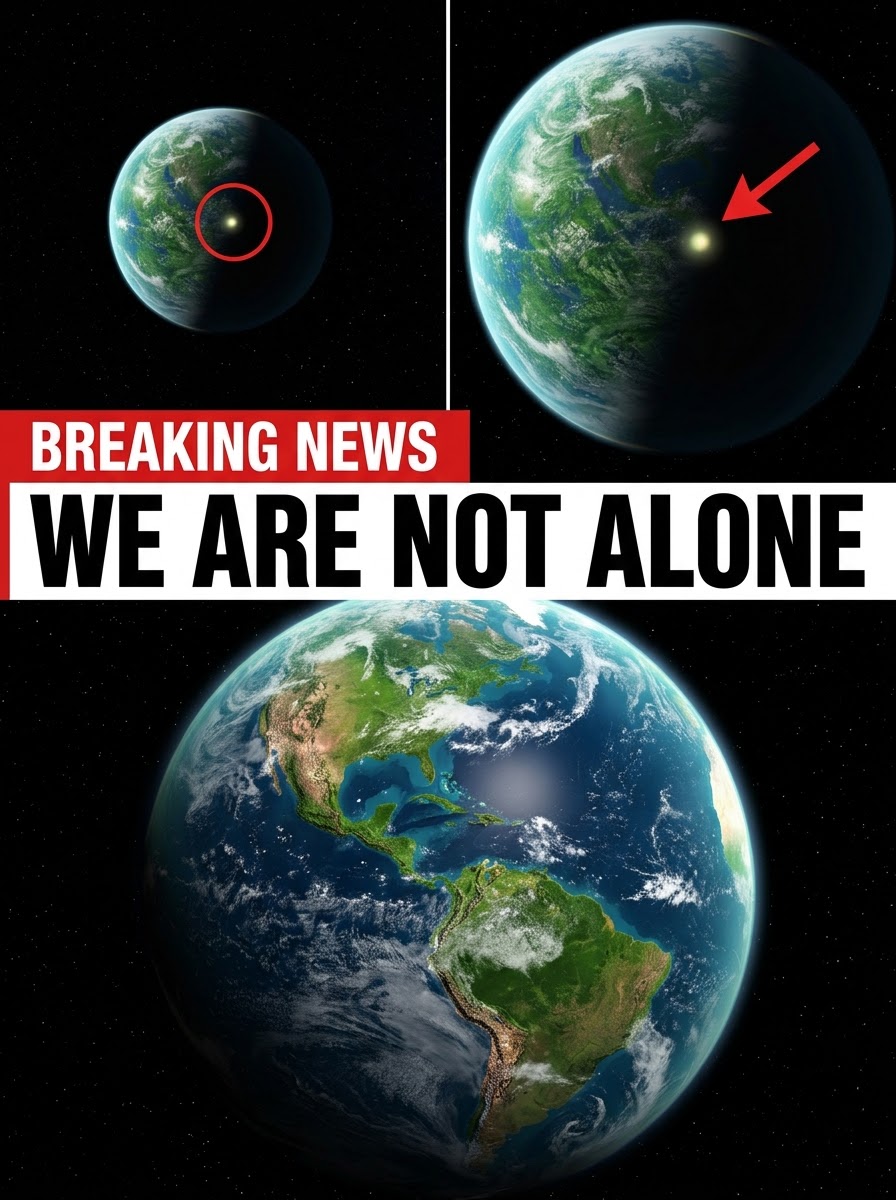
    James Webb Telescope May Have Detected a Potentially Habitable Planet

    For decades, scientists have searched the universe for evidence that life may exist beyond Earth. Now, observations from the James Webb Space Telescope have brought that search back into the spotlight.

    The telescope has detected intriguing signals from the atmosphere of a distant exoplanet. Researchers are studying these signals because they may reveal important information about the planet’s environment and whether it could potentially support life.

    A Signal Hidden in Infrared Light

    The James Webb Space Telescope is designed to observe infrared light, allowing scientists to study the atmospheres of planets orbiting distant stars.

    By analyzing how starlight passes through a planet’s atmosphere, researchers can identify the chemical fingerprints of different gases.

    In this case, the atmospheric data have revealed a combination of chemical signatures that has attracted scientific attention.

    An Unusual Atmospheric Chemistry

    One of the most interesting aspects is the apparent presence of several gases existing together in a complex chemical balance.

    On Earth, certain atmospheric chemical combinations can be associated with biological activity. However, scientists cannot automatically assume that the same explanation applies to another planet.

    Non-biological geological and chemical processes can also produce similar signatures.

    That means these observations should be considered potential clues—not proof of extraterrestrial life.

    Could the Planet Support Life?


    Another important question is whether the planet exists in conditions that could allow liquid water and other ingredients considered important for life.

    Its location relative to its host star and the characteristics of its atmosphere are therefore particularly important.

    If future observations confirm that the planet has a stable atmosphere and suitable environmental conditions, it could become an important target for further research.

    Possible Biosignatures

    Scientists are especially interested in molecules that, on Earth, can be produced by biological processes.

    Finding such molecules on another planet would be exciting. But even then, researchers would need to rule out alternative explanations before claiming that life had been discovered.

    This is one of the biggest challenges in the search for extraterrestrial life: a potential biosignature is not the same thing as a confirmed life signature.

    What If the Evidence Is Confirmed?

    If future observations demonstrate that the atmospheric signals are genuinely connected to biological activity, the discovery could transform our understanding of life in the universe.

    It would suggest that the conditions required for life may not be unique to Earth.

    The question would then change from “Is there life beyond Earth?” to something much bigger:

    How common is life throughout the universe?

    Scientists Still Need More Evidence

    Extraordinary claims require repeated observations and independent verification.

    Researchers will need to determine whether the atmospheric signatures remain consistent over time and whether natural processes can explain what the telescope is detecting.

    For now, the discovery should therefore be viewed as an intriguing scientific possibility rather than confirmation of an alien world.

    The James Webb Space Telescope is giving scientists an unprecedented ability to study distant exoplanet atmospheres.

    And perhaps, with enough observations, it may eventually help answer one of humanity’s oldest questions:

    Are we truly alone in the universe?

  • James Webb Telescope Just Detected A FULLY Habitable

    James Webb Telescope Just Detected A FULLY Habitable


    James Webb Telescope May Have Detected a Potentially Habitable Planet

    For decades, scientists have searched the universe for evidence that life may exist beyond Earth. Now, observations from the James Webb Space Telescope have brought that search back into the spotlight.

    The telescope has detected intriguing signals from the atmosphere of a distant exoplanet. Researchers are studying these signals because they may reveal important information about the planet’s environment and whether it could potentially support life.

    A Signal Hidden in Infrared Light

    The James Webb Space Telescope is designed to observe infrared light, allowing scientists to study the atmospheres of planets orbiting distant stars.

    By analyzing how starlight passes through a planet’s atmosphere, researchers can identify the chemical fingerprints of different gases.

    In this case, the atmospheric data have revealed a combination of chemical signatures that has attracted scientific attention.

    An Unusual Atmospheric Chemistry

    One of the most interesting aspects is the apparent presence of several gases existing together in a complex chemical balance.

    On Earth, certain atmospheric chemical combinations can be associated with biological activity. However, scientists cannot automatically assume that the same explanation applies to another planet.

    Non-biological geological and chemical processes can also produce similar signatures.

    That means these observations should be considered potential clues—not proof of extraterrestrial life.

    Could the Planet Support Life?


    Another important question is whether the planet exists in conditions that could allow liquid water and other ingredients considered important for life.

    Its location relative to its host star and the characteristics of its atmosphere are therefore particularly important.

    If future observations confirm that the planet has a stable atmosphere and suitable environmental conditions, it could become an important target for further research.

    Possible Biosignatures

    Scientists are especially interested in molecules that, on Earth, can be produced by biological processes.

    Finding such molecules on another planet would be exciting. But even then, researchers would need to rule out alternative explanations before claiming that life had been discovered.

    This is one of the biggest challenges in the search for extraterrestrial life: a potential biosignature is not the same thing as a confirmed life signature.

    What If the Evidence Is Confirmed?

    If future observations demonstrate that the atmospheric signals are genuinely connected to biological activity, the discovery could transform our understanding of life in the universe.

    It would suggest that the conditions required for life may not be unique to Earth.

    The question would then change from “Is there life beyond Earth?” to something much bigger:

    How common is life throughout the universe?

    Scientists Still Need More Evidence

    Extraordinary claims require repeated observations and independent verification.

    Researchers will need to determine whether the atmospheric signatures remain consistent over time and whether natural processes can explain what the telescope is detecting.

    For now, the discovery should therefore be viewed as an intriguing scientific possibility rather than confirmation of an alien world.

    The James Webb Space Telescope is giving scientists an unprecedented ability to study distant exoplanet atmospheres.

    And perhaps, with enough observations, it may eventually help answer one of humanity’s oldest questions:

    Are we truly alone in the universe?

  • NASA Astronauts Uncover Evidence of Alien-Occupied City on the Moon

    NASA Astronauts Uncover Evidence of Alien-Occupied City on the Moon


    NASA Astronauts Uncover Evidence of Alien-Occupied City on the Moon!

    In an astonishing and contentious revelation, NASA astronauts claim to have unearthed traces of what appears to be a city on the moon, raising the specter of an extraterrestrial presence residing in an enigmatic lunar metropolis. This revelation, if validated, could reshape our understanding of the cosmos and ignite a new era of speculation about the existence of intelligent life beyond Earth.

    The extraordinary account stems from the annals of Apollo missions, where astronauts allegedly stumbled upon anomalous structures and formations on the moon’s surface. These peculiarities, resembling remnants of a cityscape, prompted whispers within the scientific community and led to discreet investigations into the possibility of an extraterrestrial civilization inhabiting Earth’s natural satellite.

    According to the astronauts’ testimonies, the traces of the alleged lunar city include structural formations, anomalous lights, and geometric patterns that defy natural explanations. The clandestine nature of these discoveries, concealed within mission logs and cryptic communications, has fueled speculation about whether NASA has been aware of an extraterrestrial presence but chose to withhold information from the public.

    As the news surfaced, skeptics questioned the reliability of the astronauts’ accounts, suggesting optical illusions, camera anomalies, or even a psychological phenomenon known as pareidolia, where the human mind perceives familiar patterns in random stimuli. NASA, cognizant of the gravity of such claims, has neither confirmed nor denied the existence of an alien-inhabited lunar city, maintaining a cautious approach to the unfolding narrative.

    The implications of such a revelation are profound, not only challenging our understanding of the moon’s geological history but also raising fundamental questions about the potential for intelligent extraterrestrial life within our cosmic neighborhood. Enthusiasts and researchers argue for increased transparency and further exploration to ascertain the veracity of these extraordinary claims.


    Conspiracy theories have naturally emerged, suggesting that governments and space agencies are engaged in suppressing evidence of extraterrestrial encounters. Proponents of the lunar city hypothesis insist on the need for advanced telescopic observations, lunar reconnaissance missions, or even human expeditions to validate or debunk the claims made by the astronauts.

    While mainstream scientific discourse remains cautious, the notion of a lunar city occupied by aliens has captured the public’s imagination, fostering debates, speculations, and a renewed interest in lunar exploration. As technological advancements continue to expand our capabilities in space observation, humanity stands on the precipice of potentially unraveling the mysteries that may be concealed within the craters and shadows of Earth’s celestial companion. The alleged traces of a city on the moon, if substantiated, could mark a pivotal moment in our quest to understand the cosmos and the tantalizing prospect of sharing it with otherworldly inhabitants.

  • NASA Astronauts Uncover Evidence of Alien-Occupied City on the Moon


    NASA Astronauts Uncover Evidence of Alien-Occupied City on the Moon!

    In an astonishing and contentious revelation, NASA astronauts claim to have unearthed traces of what appears to be a city on the moon, raising the specter of an extraterrestrial presence residing in an enigmatic lunar metropolis. This revelation, if validated, could reshape our understanding of the cosmos and ignite a new era of speculation about the existence of intelligent life beyond Earth.

    The extraordinary account stems from the annals of Apollo missions, where astronauts allegedly stumbled upon anomalous structures and formations on the moon’s surface. These peculiarities, resembling remnants of a cityscape, prompted whispers within the scientific community and led to discreet investigations into the possibility of an extraterrestrial civilization inhabiting Earth’s natural satellite.


    According to the astronauts’ testimonies, the traces of the alleged lunar city include structural formations, anomalous lights, and geometric patterns that defy natural explanations. The clandestine nature of these discoveries, concealed within mission logs and cryptic communications, has fueled speculation about whether NASA has been aware of an extraterrestrial presence but chose to withhold information from the public.

    As the news surfaced, skeptics questioned the reliability of the astronauts’ accounts, suggesting optical illusions, camera anomalies, or even a psychological phenomenon known as pareidolia, where the human mind perceives familiar patterns in random stimuli. NASA, cognizant of the gravity of such claims, has neither confirmed nor denied the existence of an alien-inhabited lunar city, maintaining a cautious approach to the unfolding narrative.

    The implications of such a revelation are profound, not only challenging our understanding of the moon’s geological history but also raising fundamental questions about the potential for intelligent extraterrestrial life within our cosmic neighborhood. Enthusiasts and researchers argue for increased transparency and further exploration to ascertain the veracity of these extraordinary claims.

    Conspiracy theories have naturally emerged, suggesting that governments and space agencies are engaged in suppressing evidence of extraterrestrial encounters. Proponents of the lunar city hypothesis insist on the need for advanced telescopic observations, lunar reconnaissance missions, or even human expeditions to validate or debunk the claims made by the astronauts.

    While mainstream scientific discourse remains cautious, the notion of a lunar city occupied by aliens has captured the public’s imagination, fostering debates, speculations, and a renewed interest in lunar exploration. As technological advancements continue to expand our capabilities in space observation, humanity stands on the precipice of potentially unraveling the mysteries that may be concealed within the craters and shadows of Earth’s celestial companion. The alleged traces of a city on the moon, if substantiated, could mark a pivotal moment in our quest to understand the cosmos and the tantalizing prospect of sharing it with otherworldly inhabitants.

  • NASA Astronauts Uncover Evidence of Alien-Occupied City on the Moon

    NASA Astronauts Uncover Evidence of Alien-Occupied City on the Moon


    NASA Astronauts Uncover Evidence of Alien-Occupied City on the Moon!

    In an astonishing and contentious revelation, NASA astronauts claim to have unearthed traces of what appears to be a city on the moon, raising the specter of an extraterrestrial presence residing in an enigmatic lunar metropolis. This revelation, if validated, could reshape our understanding of the cosmos and ignite a new era of speculation about the existence of intelligent life beyond Earth.

    The extraordinary account stems from the annals of Apollo missions, where astronauts allegedly stumbled upon anomalous structures and formations on the moon’s surface. These peculiarities, resembling remnants of a cityscape, prompted whispers within the scientific community and led to discreet investigations into the possibility of an extraterrestrial civilization inhabiting Earth’s natural satellite.


    According to the astronauts’ testimonies, the traces of the alleged lunar city include structural formations, anomalous lights, and geometric patterns that defy natural explanations. The clandestine nature of these discoveries, concealed within mission logs and cryptic communications, has fueled speculation about whether NASA has been aware of an extraterrestrial presence but chose to withhold information from the public.

    As the news surfaced, skeptics questioned the reliability of the astronauts’ accounts, suggesting optical illusions, camera anomalies, or even a psychological phenomenon known as pareidolia, where the human mind perceives familiar patterns in random stimuli. NASA, cognizant of the gravity of such claims, has neither confirmed nor denied the existence of an alien-inhabited lunar city, maintaining a cautious approach to the unfolding narrative.

    The implications of such a revelation are profound, not only challenging our understanding of the moon’s geological history but also raising fundamental questions about the potential for intelligent extraterrestrial life within our cosmic neighborhood. Enthusiasts and researchers argue for increased transparency and further exploration to ascertain the veracity of these extraordinary claims.

    Conspiracy theories have naturally emerged, suggesting that governments and space agencies are engaged in suppressing evidence of extraterrestrial encounters. Proponents of the lunar city hypothesis insist on the need for advanced telescopic observations, lunar reconnaissance missions, or even human expeditions to validate or debunk the claims made by the astronauts.

    While mainstream scientific discourse remains cautious, the notion of a lunar city occupied by aliens has captured the public’s imagination, fostering debates, speculations, and a renewed interest in lunar exploration. As technological advancements continue to expand our capabilities in space observation, humanity stands on the precipice of potentially unraveling the mysteries that may be concealed within the craters and shadows of Earth’s celestial companion. The alleged traces of a city on the moon, if substantiated, could mark a pivotal moment in our quest to understand the cosmos and the tantalizing prospect of sharing it with otherworldly inhabitants.

  • 13 minutes ago: Russian Su-57 pilot destroys US aircraft carrier carrying 700 tanks… See more

    13 minutes ago: Russian Su-57 pilot destroys US aircraft carrier carrying 700 tanks… See more


    Did a Russian Su-57 Really Destroy a U.S. Aircraft Carrier? Here’s What We Know

    A shocking image and headline are spreading rapidly across social media, claiming that a Russian Su-57 fighter jet destroyed a U.S. aircraft carrier carrying hundreds of tanks. The dramatic photo has sparked intense debate, with many users wondering if a major military confrontation has just taken place.

    At first glance, the image appears convincing. Massive explosions, thick black smoke, and military aircraft flying overhead create the impression of a catastrophic attack. However, a viral image alone is not evidence that the event actually happened.

    If a U.S. aircraft carrier had truly been destroyed in combat, it would instantly become one of the biggest international news stories. Such an event would be reported by major global news organizations and confirmed—or denied—through official government and military statements.

    Experts also warn that advances in AI image generation and digital editing have made it much easier to create realistic-looking war scenes that can spread quickly online. Because of this, dramatic claims should always be verified through multiple credible sources before being accepted as fact.


    At the time of writing, there is no independently verified evidence confirming that a Russian Su-57 destroyed a U.S. aircraft carrier as claimed in the viral post. The image and headline should therefore be treated with caution until reliable information becomes available.

    In today’s fast-moving online world, sensational headlines often spread much faster than verified facts. Taking a moment to check trustworthy sources can help prevent the spread of misinformation.

    What do you think? Is this a real breaking event, or another viral claim that needs verification? Share your thoughts in the comments below.

  • James Webb Telescope Just Det…See more

    James Webb Telescope Just Det…See more


    James Webb Telescope May Have Detected a Potentially Habitable Planet

    For decades, scientists have searched the universe for evidence that life may exist beyond Earth. Now, observations from the James Webb Space Telescope have brought that search back into the spotlight.

    The telescope has detected intriguing signals from the atmosphere of a distant exoplanet. Researchers are studying these signals because they may reveal important information about the planet’s environment and whether it could potentially support life.

    A Signal Hidden in Infrared Light

    The James Webb Space Telescope is designed to observe infrared light, allowing scientists to study the atmospheres of planets orbiting distant stars.

    By analyzing how starlight passes through a planet’s atmosphere, researchers can identify the chemical fingerprints of different gases.

    In this case, the atmospheric data have revealed a combination of chemical signatures that has attracted scientific attention.

    An Unusual Atmospheric Chemistry

    One of the most interesting aspects is the apparent presence of several gases existing together in a complex chemical balance.

    On Earth, certain atmospheric chemical combinations can be associated with biological activity. However, scientists cannot automatically assume that the same explanation applies to another planet.

    Non-biological geological and chemical processes can also produce similar signatures.

    That means these observations should be considered potential clues—not proof of extraterrestrial life.

    Could the Planet Support Life?


    Another important question is whether the planet exists in conditions that could allow liquid water and other ingredients considered important for life.

    Its location relative to its host star and the characteristics of its atmosphere are therefore particularly important.

    If future observations confirm that the planet has a stable atmosphere and suitable environmental conditions, it could become an important target for further research.

    Possible Biosignatures

    Scientists are especially interested in molecules that, on Earth, can be produced by biological processes.

    Finding such molecules on another planet would be exciting. But even then, researchers would need to rule out alternative explanations before claiming that life had been discovered.

    This is one of the biggest challenges in the search for extraterrestrial life: a potential biosignature is not the same thing as a confirmed life signature.

    What If the Evidence Is Confirmed?

    If future observations demonstrate that the atmospheric signals are genuinely connected to biological activity, the discovery could transform our understanding of life in the universe.

    It would suggest that the conditions required for life may not be unique to Earth.

    The question would then change from “Is there life beyond Earth?” to something much bigger:

    How common is life throughout the universe?

    Scientists Still Need More Evidence

    Extraordinary claims require repeated observations and independent verification.

    Researchers will need to determine whether the atmospheric signatures remain consistent over time and whether natural processes can explain what the telescope is detecting.

    For now, the discovery should therefore be viewed as an intriguing scientific possibility rather than confirmation of an alien world.

    The James Webb Space Telescope is giving scientists an unprecedented ability to study distant exoplanet atmospheres.

    And perhaps, with enough observations, it may eventually help answer one of humanity’s oldest questions:

    Are we truly alone in the universe?