Blog

  • James Webb Telescope Just D,e…See more

    James Webb Telescope Just D,e…See more


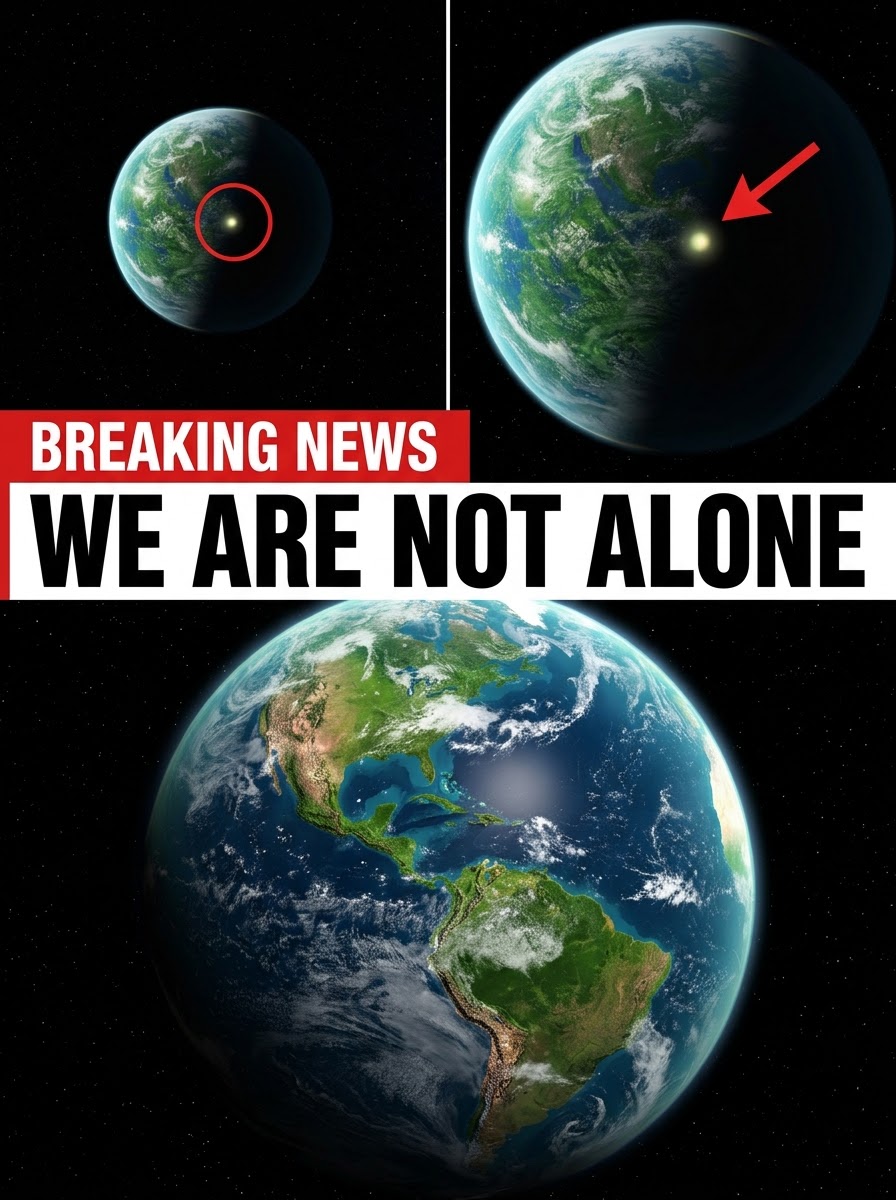
    James Webb Telescope May Have Detected a Potentially Habitable Planet

    For decades, scientists have searched the universe for evidence that life may exist beyond Earth. Now, observations from the James Webb Space Telescope have brought that search back into the spotlight.

    The telescope has detected intriguing signals from the atmosphere of a distant exoplanet. Researchers are studying these signals because they may reveal important information about the planet’s environment and whether it could potentially support life.

    A Signal Hidden in Infrared Light

    The James Webb Space Telescope is designed to observe infrared light, allowing scientists to study the atmospheres of planets orbiting distant stars.

    By analyzing how starlight passes through a planet’s atmosphere, researchers can identify the chemical fingerprints of different gases.

    In this case, the atmospheric data have revealed a combination of chemical signatures that has attracted scientific attention.

    An Unusual Atmospheric Chemistry

    One of the most interesting aspects is the apparent presence of several gases existing together in a complex chemical balance.

    On Earth, certain atmospheric chemical combinations can be associated with biological activity. However, scientists cannot automatically assume that the same explanation applies to another planet.

    Non-biological geological and chemical processes can also produce similar signatures.

    That means these observations should be considered potential clues—not proof of extraterrestrial life.

    Could the Planet Support Life?


    Another important question is whether the planet exists in conditions that could allow liquid water and other ingredients considered important for life.

    Its location relative to its host star and the characteristics of its atmosphere are therefore particularly important.

    If future observations confirm that the planet has a stable atmosphere and suitable environmental conditions, it could become an important target for further research.

    Possible Biosignatures

    Scientists are especially interested in molecules that, on Earth, can be produced by biological processes.

    Finding such molecules on another planet would be exciting. But even then, researchers would need to rule out alternative explanations before claiming that life had been discovered.

    This is one of the biggest challenges in the search for extraterrestrial life: a potential biosignature is not the same thing as a confirmed life signature.

    What If the Evidence Is Confirmed?

    If future observations demonstrate that the atmospheric signals are genuinely connected to biological activity, the discovery could transform our understanding of life in the universe.

    It would suggest that the conditions required for life may not be unique to Earth.

    The question would then change from “Is there life beyond Earth?” to something much bigger:

    How common is life throughout the universe?

    Scientists Still Need More Evidence

    Extraordinary claims require repeated observations and independent verification.

    Researchers will need to determine whether the atmospheric signatures remain consistent over time and whether natural processes can explain what the telescope is detecting.

    For now, the discovery should therefore be viewed as an intriguing scientific possibility rather than confirmation of an alien world.

    The James Webb Space Telescope is giving scientists an unprecedented ability to study distant exoplanet atmospheres.

    And perhaps, with enough observations, it may eventually help answer one of humanity’s oldest questions:

    Are we truly alone in the universe?

  • James Webb Telescope Just Detected A FULLY in space

    James Webb Telescope Just Detected A FULLY in space


    James Webb Telescope May Have Detected a Potentially Habitable Planet

    For decades, scientists have searched the universe for evidence that life may exist beyond Earth. Now, observations from the James Webb Space Telescope have brought that search back into the spotlight.

    The telescope has detected intriguing signals from the atmosphere of a distant exoplanet. Researchers are studying these signals because they may reveal important information about the planet’s environment and whether it could potentially support life.

    A Signal Hidden in Infrared Light

    The James Webb Space Telescope is designed to observe infrared light, allowing scientists to study the atmospheres of planets orbiting distant stars.

    By analyzing how starlight passes through a planet’s atmosphere, researchers can identify the chemical fingerprints of different gases.

    In this case, the atmospheric data have revealed a combination of chemical signatures that has attracted scientific attention.

    An Unusual Atmospheric Chemistry

    One of the most interesting aspects is the apparent presence of several gases existing together in a complex chemical balance.

    On Earth, certain atmospheric chemical combinations can be associated with biological activity. However, scientists cannot automatically assume that the same explanation applies to another planet.

    Non-biological geological and chemical processes can also produce similar signatures.

    That means these observations should be considered potential clues—not proof of extraterrestrial life.

    Could the Planet Support Life?


    Another important question is whether the planet exists in conditions that could allow liquid water and other ingredients considered important for life.

    Its location relative to its host star and the characteristics of its atmosphere are therefore particularly important.

    If future observations confirm that the planet has a stable atmosphere and suitable environmental conditions, it could become an important target for further research.

    Possible Biosignatures

    Scientists are especially interested in molecules that, on Earth, can be produced by biological processes.

    Finding such molecules on another planet would be exciting. But even then, researchers would need to rule out alternative explanations before claiming that life had been discovered.

    This is one of the biggest challenges in the search for extraterrestrial life: a potential biosignature is not the same thing as a confirmed life signature.

    What If the Evidence Is Confirmed?

    If future observations demonstrate that the atmospheric signals are genuinely connected to biological activity, the discovery could transform our understanding of life in the universe.

    It would suggest that the conditions required for life may not be unique to Earth.

    The question would then change from “Is there life beyond Earth?” to something much bigger:

    How common is life throughout the universe?

    Scientists Still Need More Evidence

    Extraordinary claims require repeated observations and independent verification.

    Researchers will need to determine whether the atmospheric signatures remain consistent over time and whether natural processes can explain what the telescope is detecting.

    For now, the discovery should therefore be viewed as an intriguing scientific possibility rather than confirmation of an alien world.

    The James Webb Space Telescope is giving scientists an unprecedented ability to study distant exoplanet atmospheres.

    And perhaps, with enough observations, it may eventually help answer one of humanity’s oldest questions:

    Are we truly alone in the universe?

  • Part 2 — The Secret Behind the Coffin

    Part 2 — The Secret Behind the Coffin


    Part 2 — The Secret Behind the Coffin

    Marcus slowly backed toward the exit.

    Noah stood between him and his grandmother.

    “Don’t let him leave!”

    Marcus stopped.

    For the first time, everyone in the room looked at him differently.

    Two relatives rushed to the coffin and carefully removed the tape from the old woman’s mouth.

    She gasped for air.

    Then she looked directly at Noah.

    “Call the police…”

    Her voice was barely a whisper.

    Noah grabbed his phone with trembling hands.

    Marcus suddenly shouted, “She’s confused! She doesn’t know what she’s saying!”

    But the grandmother shook her head.

    “I know exactly what happened.”

    The entire room went silent.

    She explained that the night before the funeral, Marcus had entered her bedroom and injected her with a powerful sedative.

    He believed the medication would make her appear dead long enough for a doctor to declare her deceased.

    His plan was simple.

    Once the funeral was over, her estate would be transferred according to the new documents he had secretly prepared.

    But Marcus had made one mistake.

    He hadn’t checked the security camera inside her bedroom.

    The camera had recorded everything.

    Noah looked toward the police officers arriving through the doors.

    Marcus suddenly ran.

    He didn’t get far.

    Two officers caught him near the entrance and forced him to the ground.

    As they handcuffed him, Marcus looked back at Noah.

    “You ruined everything.”

    Noah stepped closer to his grandmother and held her hand.

    “You tried to bury her alive.”

    Marcus said nothing.

    The woman squeezed Noah’s hand.

    And for the first time that day, she smiled.

    The funeral had started as a goodbye.

    But it ended with a life being saved—and a terrible secret finally exposed.

    END.

  • BREAKING NEWS Just Minutes Ago has surprised experts…See more

    BREAKING NEWS Just Minutes Ago has surprised experts…See more


    A space update that came out just minutes ago has surprised experts. A natural space rock crashed into a NASA rover working on the surface of Mars at high speed, after which the camera recorded an unusual cloud of dust and debris for a few seconds.
    The most attention-grabbing thing that initially emerged was that a new, dark mark appeared on the surface around the rover immediately after the impact. But the real question still remained.
    The rover’s sensors also recorded some data after the impact that seemed different from the usual Martian environment. Experts immediately began reviewing the data, while the cameras took more images of the same area.
    Then a new image emerged.
    The image showed a small unusual piece near the impact site, which sparked speculation on social media. Was it part of the same space rock, or did the impact reveal something hidden beneath the surface of Mars?

  • BREAKING NEWS: NASA confirms that in 2026, Earth will start to…See more

    BREAKING NEWS: NASA confirms that in 2026, Earth will start to…See more

    <

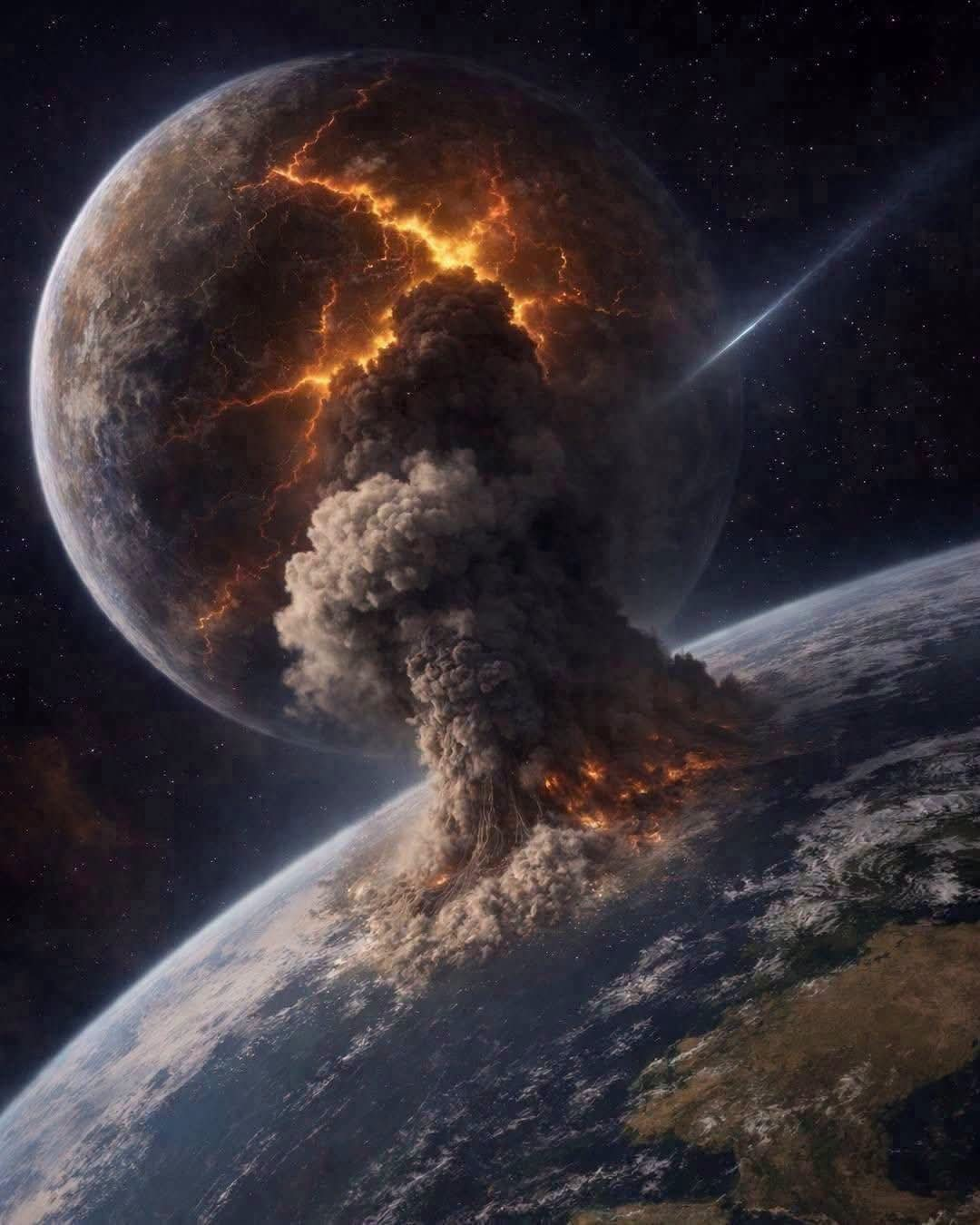
    For now, we have been spared. The giant asteroid 52768 (1998 OR2) is not going to strike Earth. Instead, it will pass by our planet at a safe distance, continuing its journey through space without touching our world.
    But its passage reminds us of an uncomfortable truth: Earth’s survival cannot depend on luck alone.
    Asteroids and other objects are constantly moving through space. While most pose no immediate danger, scientists continuously monitor them to understand their trajectories and identify any potential threats well in advance.
    The story of 1998 OR2 is therefore more than just an interesting event in the night sky. It reminds us how easily humanity can become distracted by everyday problems while much larger dangers move silently through space.
    We can simply watch this asteroid pass and forget about it—or we can take it as a reminder of why space observation, scientific research, and planetary defense matter


    Today, there is no reason to panic. This asteroid is expected to pass safely.
    But the next potentially dangerous object may not give humanity such a comfortable warning.
    Sometimes, the most valuable warning is the one that arrives before disaster happens.
    For now, we have been spared. The giant asteroid 52768 (1998 OR2) is not going to strike Earth. Instead, it will pass by our planet at a safe distance, continuing its journey through space without touching our world.
    But its passage reminds us of an uncomfortable truth: Earth’s survival cannot depend on luck alone.
    Asteroids and other objects are constantly moving through space. While most pose no immediate danger, scientists continuously monitor them to understand their trajectories and identify any potential threats well in advance.
    The story of 1998 OR2 is therefore more than just an interesting event in the night sky. It reminds us how easily humanity can become distracted by everyday problems while much larger dangers move silently through space.
    We can simply watch this asteroid pass and forget about it—or we can take it as a reminder of why space observation, scientific research, and planetary defense matter.
    Today, there is no reason to panic. This asteroid is expected to pass safely.
    But the next potentially dangerous object may not give humanity such a comfortable warning.
    Sometimes, the most valuable warning is the one that arrives before disaster happens.

  • BREAKING NEWS: NASA confirms that in 2026, Earth will start to… See mor

    BREAKING NEWS: NASA confirms that in 2026, Earth will start to… See mor


    For now, we have been spared. The giant asteroid 52768 (1998 OR2) is not going to strike Earth. Instead, it will pass by our planet at a safe distance, continuing its journey through space without touching our world.
    But its passage reminds us of an uncomfortable truth: Earth’s survival cannot depend on luck alone.
    Asteroids and other objects are constantly moving through space. While most pose no immediate danger, scientists continuously monitor them to understand their trajectories and identify any potential threats well in advance.
    The story of 1998 OR2 is therefore more than just an interesting event in the night sky. It reminds us how easily humanity can become distracted by everyday problems while much larger dangers move silently through space.
    We can simply watch this asteroid pass and forget about it—or we can take it as a reminder of why space observation, scientific research, and planetary defense matter.
    Today, there is no reason to panic. This asteroid is expected to pass safely.
    But the next potentially dangerous object may not give humanity such a comfortable warning.
    Sometimes, the most valuable warning is the one that arrives before disaster happens.


  • BREAKING NEWS: NASA confirms that in 2026, Earth will start to…See mor

    BREAKING NEWS: NASA confirms that in 2026, Earth will start to…See mor


    For now, we have been spared. The giant asteroid 52768 (1998 OR2) is not going to strike Earth. Instead, it will pass by our planet at a safe distance, continuing its journey through space without touching our world.
    But its passage reminds us of an uncomfortable truth: Earth’s survival cannot depend on luck alone.
    Asteroids and other objects are constantly moving through space. While most pose no immediate danger, scientists continuously monitor them to understand their trajectories and identify any potential threats well in advance.
    The story of 1998 OR2 is therefore more than just an interesting event in the night sky. It reminds us how easily humanity can become distracted by everyday problems while much larger dangers move silently through space.
    We can simply watch this asteroid pass and forget about it—or we can take it as a reminder of why space observation, scientific research, and planetary defense matter.
    Today, there is no reason to panic. This asteroid is expected to pass safely.
    But the next potentially dangerous object may not give humanity such a comfortable warning.
    Sometimes, the most valuable warning is the one that arrives before disaster happens.

  • BREAKING NEWS Just Minutes Ago has surprised experts…See more

    BREAKING NEWS Just Minutes Ago has surprised experts…See more

    A space update that came out just minutes ago has surprised experts. A natural space rock crashed into a NASA rover working on the surface of Mars at high speed, after which the camera recorded an unusual cloud of dust and debris for a few seconds.
    The most attention-grabbing thing that initially emerged was that a new, dark mark appeared on the surface around the rover immediately after the impact. But the real question still remained.
    The rover’s sensors also recorded some data after the impact that seemed different from the usual Martian environment. Experts immediately began reviewing the data, while the cameras took more images of the same area.
    Then a new image emerged.
    The image showed a small unusual piece near the impact site, which sparked speculation on social media. Was it part of the same space rock, or did the impact reveal something hidden beneath the surface of Mars?

  • 🚨 They’ve just been confirmed… See more

    🚨 They’ve just been confirmed… See more

    🚨 They’ve just been confirmed… See more